Epilepsy is an umbrella term for a condition where there is a tendency to have seizures. Seizures are transient episodes of abnormal electrical activity in the brain. There are many different types of seizures.
A diagnosis of epilepsy is made by a specialist based on the characteristics of the seizure episodes.
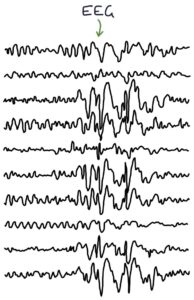
An electroencephalogram (EEG) can show typical patterns in different forms of epilepsy and support the diagnosis.
An MRI brain can be used to visualise the structure of the brain. It is used to diagnose structural problems that may be associated with seizures and other pathology such as tumours.
Other investigations can be used to exclude other pathology, particularly an ECG to exclude problems in the heart.
There are many types of seizures. There are different first line treatments for epilepsy with different types of seizures. The aim of treatment is to be seizure free on the minimum anti-epileptic medications. Ideally they should be on monotherapy with a single anti-epileptic drug. Treatment is initiated and guided by a specialist.
Generalised Tonic-Clonic Seizures
These are what most people think of with an epileptic seizure. There is loss of consciousness and tonic (muscle tensing) and clonic (muscle jerking) episodes. Typically the tonic phase comes before the clonic phase. There may be associated tongue biting, incontinence, groaning and irregular breathing.
After the seizure there is a prolonged post-ictal period where the person is confused, drowsy and feels irritable or depressed.
Management of tonic-clonic seizures is with: